Many people are drawn to astrology but often get caught up in common myths that can cloud their understanding.
For instance, the idea that your zodiac sign determines your entire personality is a misconception; it’s just one piece of a much larger puzzle.
Another myth is that horoscopes are strictly about predicting the future; in reality, they often serve as guidance for personal growth and self-reflection.
You might also hear about astrology being unscientific, but many find that it offers meaningful insights that resonate on a personal level.
Some newcomers worry that astrology is only for ‘true believers,’ when in fact, it can be a tool for anyone curious about themselves and their relationships.
Understanding these myths can help you navigate astrology with an open heart and mind, embracing its potential without the confusion.
- Astrology encompasses more than just your sun sign.
- All zodiac signs influence your personality differently.
- Zodiac compatibilities vary; they aren’t set in stone.
- Astrology provides insights, not precise predictions.
- Understanding astrology requires a broader perspective.
There’s definitely more to unpack about astrology beyond those key points.
In the upcoming sections, we’ll look at some common misconceptions and clarify how they can actually shape your understanding of astrology.
We’ll also explore the significance of the different planets in your chart and how they interact with your zodiac sign.
And, if you’re curious about how to practically use astrology in your daily life, I’ve got some tips that can help you apply these insights.
1. Astrology Is Only About Sun Signs
Many people mistakenly believe that astrology is solely focused on sun signs, which are determined by one’s birth date and are the foundation of many horoscope readings.
This misconception leads to a significant misunderstanding of the vast landscape of astrological knowledge that extends far beyond just sun signs.
In reality, each individual’s astrological profile is much more complex, encompassing a detailed analysis of their whole natal chart, which includes the positions of the moon, planets, and other celestial bodies at the time of their birth.
While sun signs represent only about 10% of an individual’s astrological makeup, the other 90% comprises the influence of the moon sign, rising sign, and various planetary positions.
The moon sign reflects a person’s emotional landscape and instinctive reactions, while the rising sign or ascendant embodies one’s outward behavior and appearance.
These integral components work in unison to shape an individual’s personality, motivations, and how they relate to others.
To further elaborate on this complexity, let’s consider some of the different aspects that play a crucial role in astrology:
- Four Elements – Each sign belongs to one of four elements: fire, earth, air, or water, which influence underlying characteristics.
- Modalities – Signs are categorized into cardinal, fixed, and mutable modalities, denoting how they respond to changes and challenges.
- Planets – The positions of planets like Venus, Mars, and Saturn in relation to one another significantly influence personal traits and life events.
- Houses – The chart is divided into twelve houses, each representing different aspects of life, from career to personal relationships.
These elements showcase that while sun signs do offer an introductory glimpse into one’s personality, they are not the be-all and end-all in astrological interpretation.
Moreover, focusing solely on sun signs often leads to oversimplification and generalizations that do not truly reflect an individual’s unique characteristics.
When considering the entirety of a natal chart, one can derive insights that are significantly more nuanced, illustrating how diverse and intricate an individual’s personality can be.
For instance, a person with a sun sign in Aries may be perceived as impulsive and assertive, but their moon in Pisces could reveal a more sensitive and introspective emotional side.
Such combinations highlight the importance of examining multiple facets of a chart, rather than relying solely on the sun sign to gauge someone’s personality.
Additionally, it is essential to understand that astrology is fundamentally about the interplay between various celestial bodies and their influences.
This intricate dance of astrological elements truly portrays a more comprehensive view of an individual’s life path and experiences.
Thus, recognizing the limitations of sun sign astrology is crucial for anyone wishing to tell you more about the wonderful universe of astrology.
In this way, a more holistic understanding of astrology not only enriches one’s knowledge but also enables a greater appreciation for the complexities of human behavior and relationships.
In the end, by embracing the full spectrum of astrological influences, one can gain valuable insights that transcend the simplistic sun sign categorizations.
2. All Signs Are Affected Equally
One common misconception in the world of astrology is that all zodiac signs experience astrological events in the same way.
This idea suggests that regardless of the zodiac sign, individuals will have a similar experience during significant transits or influences.
However, this belief oversimplifies the complexity and nuances inherent in astrological interpretations.
Each zodiac sign is influenced by various factors, including their unique elemental qualities, planetary rulers, and individual natal charts.
The twelve signs of the zodiac Aries, Taurus, Gemini, and so forth are divided into different elements: fire, earth, air, and water.
This classification reveals that signs under the same element may share certain traits and experiences, but they are not affected equally.
For instance, fire signs like Aries and Leo may respond differently to the same planetary transit than water signs like Cancer and Scorpio.
To further compound this complexity, the individual natal chart determines how planetary movements influence each person uniquely.
A person’s rising sign, moon sign, and the placement of planets at the time of their birth all contribute to a highly personalized astrological profile.
Thus, a Taurus may react differently to a Venus retrograde than another Taurus whose sun is placed in a different house in their chart.
Moreover, other astrological factors, such as aspects between planets and the timing of events, can yield vastly different outcomes.
A good example would be, when a significant planetary alignment occurs, one person’s experience might involve personal growth and opportunities, while another might face challenges.
Another element that emphasizes the inequality among astrological sign experiences is the current cosmic climate.
Each sign may interact with transits in ways that reflect their inherent strengths and vulnerabilities.
To illustrate, a Gemini might find the influence of a Mercury retrograde manageable due to their adaptability, while a Virgo may struggle with miscommunication more acutely due to their perfectionist tendencies.
Additionally, individual’s experiences of transiting planets are also greatly affected by the current placements and aspects in their own natal chart.
This aspect of astrology adds to the richness and depth of the practice, revealing that no two astrological experiences are identical.
Therefore, while astrological events may impact all signs in some capacity, it is inaccurate to assert that they are affected equally.
Important: It is inaccurate to assert that all zodiac signs are affected equally by astrological events, as each sign’s experience is shaped by their unique elemental qualities, planetary rulers, and individual natal charts.
3. Zodiac Compatibilities Are Absolute Truths
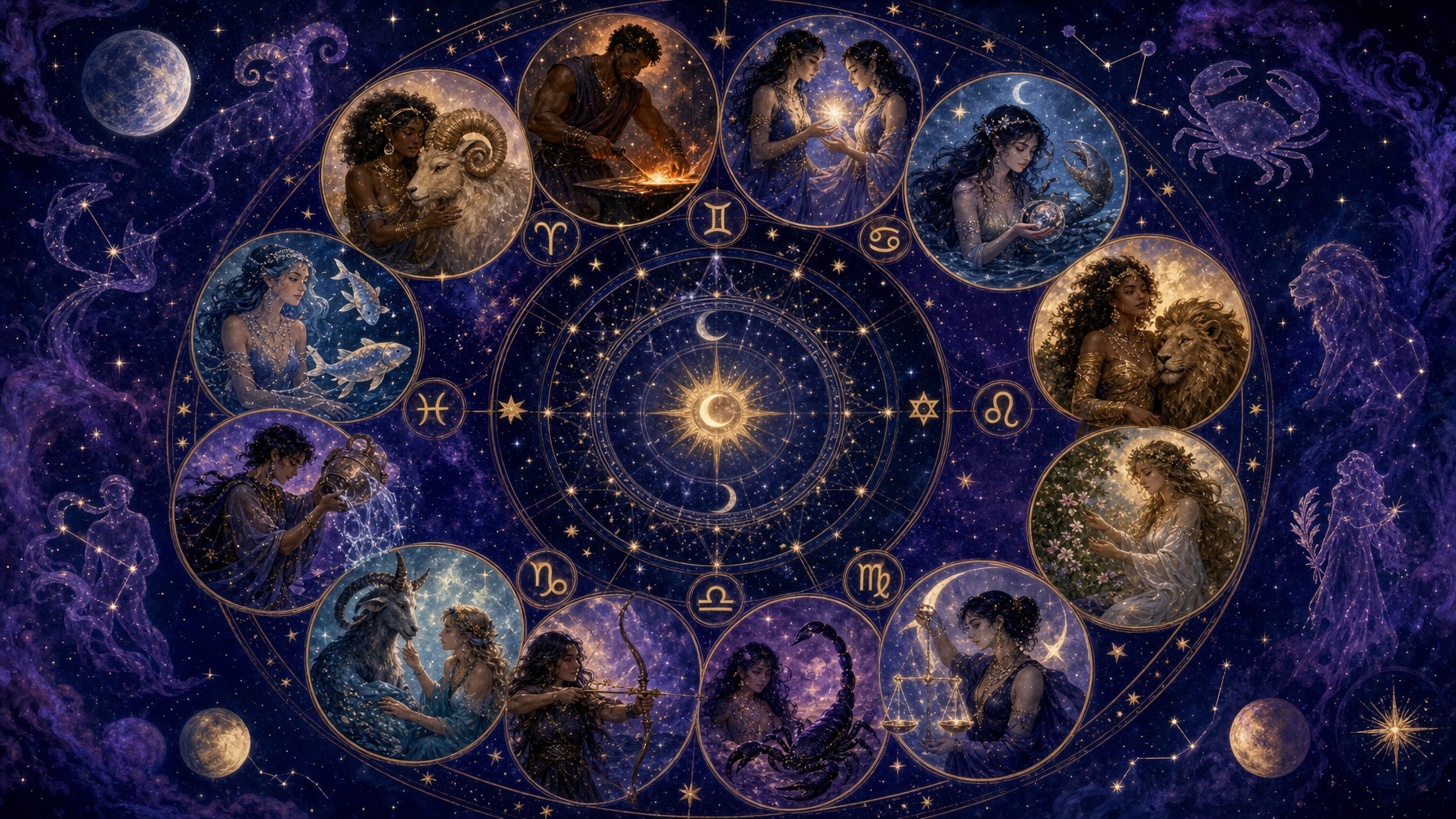
When discussing astrology, one of the most prevalent beliefs is that zodiac compatibilities function as universal truths that apply uniformly to everyone.
However, this perspective can overwhelmingly oversimplify a complex topic among zodiac aficionados.
While it is true that certain sun signs exhibit traits that may resonate well with others, it is less about the compatibility dictated by these signs and more about the intricate dynamics of individual personalities.
Every person, regardless of their zodiac sign, has a unique blend of qualities influenced by their entire astrological chart, which includes other significant elements such as the moon and rising signs.
This means that while a Taurus might generally struggle with a Leo because of their differing natures, this is not a predetermined fate due to the fixed signs alone.
It’s crucial to recognize that personal experiences, values, and life circumstances can shape relationships in ways that zodiac compatibility cannot predict with absolute certainty.
Here’s a list of factors that influence compatibility beyond just zodiac signs:
- Personal Growth: Individual development can impact how two people relate to each other.
- Communication Styles: The way individuals express themselves can enhance or hinder compatibility.
- Shared Interests: Common hobbies and goals often create stronger bonds than zodiac traits.
- Values and Beliefs: Compatibility often depends on aligned values more than simply astrological predictions.
Moreover, compatibilities that some individuals establish based on sun signs could easily lead to misinterpretations.
For instance, while an astrologer might insist that Gemini and Sagittarius are highly compatible due to their mutual love for adventure, this assertion relies heavily on stereotypes that do not account for personal dynamics.
In reality, any two individuals, regardless of their zodiac backgrounds, can build a substantive connection if they share a mutual respect for each other’s independence.
Furthermore, it’s important to appreciate that conflicting sun signs can also lead to fulfilling partnerships when both parties are willing to navigate their differences.
While certain signs may suggest a natural ease or friction, these outcomes can be beautifully complicated by myriad variables that often lead to deeper understanding.
In the end, zodiac compatibilities should serve as guidelines rather than definitive truths, encouraging individuals to explore their connections with open minds.
Being aware of these nuances allows a person to reflect on their relationship’s unique characteristics without the constraints of astrological stereotypes.
In considering how one interacts within relationships, leaning heavily on astrological compatibilities can hinder personal growth and the development of meaningful connections.
By recognizing this, individuals can approach relationships with a more holistic view that appreciates the full spectrum of human connection.
Pro Tip: Don’t let zodiac compatibilities dictate your relationships; remember that personal growth, communication styles, shared interests, and values play a far more crucial role in building meaningful connections.
Respecting the complexities of personality goes a long way in allowing relationships to flourish beyond the confines of any predetermined cosmic narrative.
Thus, while zodiac signs can offer interesting insights, it is essential to approach compatibilities with a discerning and flexible perspective.
4. Astrology Predicts Exact Future Events
One of the most common misconceptions about astrology is that it can predict exact future events with incredible accuracy.
This belief often leads individuals to treat their horoscopes as definitive blueprints of their future, causing them to misinterpret the nature and purpose of astrological insights.
In reality, astrology offers guidance and potential themes rather than precise predictions about future occurrences.
Astrological readings essentially provide an analysis of cosmic energies and influences based on planetary positions at a certain point in time.
The planets act more like symbols and indicators, revealing tendencies that may unfold in a person’s life rather than dictating concrete outcomes.
For instance, an astrological forecast might suggest a time of growth and opportunity, but how one interprets those energies, and what actions they take, remains ultimately in their own hands.
This aspect of astrology emphasizes the importance of personal agency in navigating life’s challenges and opportunities.
Many people find comfort in astrology, viewing it as a tool to help them understand themselves and the world around them, rather than a strict guideline of what must happen.
It is also crucial to recognize that astrological influences can vary significantly from one individual to another, depending on their entire natal chart and not just their Sun sign.
This complexity means that while one person may experience certain events during a planetary alignment, another person with a different chart may feel those influences entirely differently.
Moreover, astrology often operates on cycles and trends rather than linear predictions; these cycles inform individuals about potential windows of opportunity or challenges rather than fixed outcomes.
For instance, a challenging planetary transit might signify a time for self-reflection and growth, opening doors for personal development rather than unavoidably leading to negative experiences.
Astrologers emphasize that understanding these cyclical patterns can provide profound insights into how to best approach life events.
By fostering a mindset of adaptability and awareness, clients can make informed decisions based on astrological guidance, interpreting the cosmic signals in a way that resonates with their individuality.
This perspective encourages individuals to engage in their lives actively, using astrology as a compass to navigate uncertain terrain rather than a crystal ball to predict a predetermined fate.
At the end of the day, the idea that astrology can provide exact predictions oversimplifies its rich and layered nature, which is designed to promote understanding, insight, and personal growth rather than premature expectations.
The Bottom Line
Astrology is a rich, intricate system that goes far beyond mere sun signs.
Each zodiac sign contributes to a unique cosmic fingerprint, suggesting that all signs are affected differently rather than equally.
Compatibilities between zodiac signs can provide insights, but they are not absolute truths and should be approached with an open mind.
Moreover, while astrology offers guidance and perspective, it does not predict exact events but rather reflects potential paths we can explore.
Embracing astrology means appreciating the depth of its wisdom and the fluidity of our experiences within the cosmic dance.